Articles

  • Festival of Marketing 2016: The top takeaways from M&S, Mondelez and Unilever

    Festival of Marketing 2016: The top takeaways from M&S, Mondelez and Unilever

    M&S on why it doesn’t target by age and Mondelez talks about the balance between data and creativity.

    Marketing Week 5th October 2016

    Targeting has ‘nothing to do with age’

    Marks & Spencer doesn’t want to “judge people by age” and instead uses data from its members club and loyalty programme Sparks to identify customers by attitude.

    Speaking at the Festival of Marketing today (5 October) head of CRM and loyalty at M&S, Ryan Davies explained

    “It’s more important for us to market based on attitudes and products you are interested in”

    He told delegates that the brand’s targeting is based on a combination of attitudes, purchasing frequency and customer journeys, which has “nothing to do with age” and “everything to do with how we talk about products and the content we put around those things”.

    The brand is hoping to use this interest-based targeting to encourage customers to shop across the business, for example food then over to clothing and vice versa.

    If we can move the food shoppers into becoming clothing shoppers then we have opened [that person] up to two categories so we have twice as much of a chance they will come back and shop with us.

    But this process will take time, according to Davies, who is six months into the role. He also told the audience that he wished he knew “how big and complex the organisation” was before starting and that “coming in and thinking you are going to change the world in two months doesn’t work out”.

    For the 133-year-old business, Davies said it will take time to go from mass offers to personalised dealsthat are less restrictive and reward its customers. “It’s a journey and not a big bang,” he concluded.

    It’s tougher for legacy brands to stand for something

    Union is an artisan coffee roaster built on offering maximum returns to its growers. It was established in 2001 to combat historically low global coffee prices and to combat the subsequent negative impact on the local communities in the likes of African which rely on the coffee trade.

    And speaking on the Realising Your Potential Stage today (5 October), Jeremy Torz, founder and MD of Union Hand Roasted Coffee, warned that achieving true brand purpose takes patience.

    Tori was quick to hit out at the major coffee giants, which “act like being FairTrade-compliant is a job well done.”

    He joked: “I would rather companies paid more for coffee rather than getting a cheap deal and then having a big marketing budget and partnering with WWF or webcams for rainforests.

    “Most consumers don’t know what FairTrade means either. Does it mean the price paid to growers is aspirational or minimum wage? In my experience it is the latter. At the end of the day, consumers realise empty promises straight away. They want real purpose.”

    Achieving real purpose and the profitability that comes with it also takes  a long time, according to Torz.

    He added: “The difference between a business founded with social purpose versus a legacy business is key, as if you’re the latter it is harder to be trusted and understood.

    “If you want to make a social impact then it needs to be something you keep on backing. Not everything comes back with an immediate media sale. It has taken us years to build a supply chain in Africa and to change people’s lives. It doesn’t happen over night.”

    Balance data and creativity to achieve your best work

    The ability to use data creatively is the key to devising marketing that is not only personalised, but highly relevant to the customer journey.

    Speaking at the Festival of Marketing 2016, Mondelez International growth analytics manager Matthew Stockbridge argued that data does not mean the death of creativity, rather that drawing on the right insights creates a stronger and more relevant campaign.

    “I’ve had wonderful discussions with someone on the creative side who will say, ‘if I have any kinds of boundaries in terms of data then you’re killing me creatively.’ But at the end of the day we still need to drive value for shareholders and sell bars of chocolate,”

    “Creating amazing campaigns that win lots of awards at Cannes are great and we like to do that, but what we also like to do is sell some products”

    Matthew Stockbridge, growth analytics manager, Mondelez

    “I fundamentally believe that if you squeeze the creative process something really clever can come out of it. I don’t think the absence of barriers and rules makes the creative better at breaking through. We can still do epic creative work, but you’ve got to think how things are changing.”

    Focus on the craft

    Speaking on the same panel, managing director of the Direct Marketing Association (DMA), Rachel Aldighieri, advised marketers not to get caught up in the data and lose focus on the craft that creates great marketing.

    “It’s about taking a customer centric approach, as opposed to saying how much advertising can we get out there. We talk more about relevancy, not necessarily personalisation. We also talk a lot about craft. People block ads if they’re not entertaining and they don’t want to engage with them.

    “Instead put more focus on the craft. Data and technology is obviously hugely important, but the creative is really important,” she added.

    Brands should not expect influencers to create content for free

    The payment piece around influencers continues to cause controversy, according to Heather Mitchell, global PR and social media director, haircare at Unilever.

    “Five years ago brands weren’t paying influencers as much as they are now and I think some people questioned that,” she said. “We shouldn’t expect influencers to create things for us or talk about our products for free.”

    While Unilever will not stop advertising its mass reach products through traditional channels like TV and print, its focus is shifting to influencer-created content, she said.

    Mitchell believes brands should now be paying influencers and content creators in the same way they used to pay publishing houses “quite frankly because their reach is much bigger but also because their credibility is even stronger”.

    While the number of influencers vying for consumers attention continues to rise, Mitchell suggests we are beginning to reach a tipping point. She predicts a lot of influencers making a name for themselves today will not be around in a few years time as they are not adding value to consumers’ lives.

    “If I’m completely honest, as a consumer, there are a lot of influencers I’ve stopped following. I don’t care that you were at Fashion Week again. How are you actually adding value to my life? It’s going to be survival of the fittest. The ones that are continually connecting with their audience, are engaging with them and sharing their personality are the ones that will continue.”

    Festival of Marketing 2016: The top takeaways from M&S, Mondelez and Unilever
  • Medialink’s Manning: ad industry has gone too far down the ‘maths route’

    Medialink’s Manning: ad industry has gone too far down the ‘maths route’

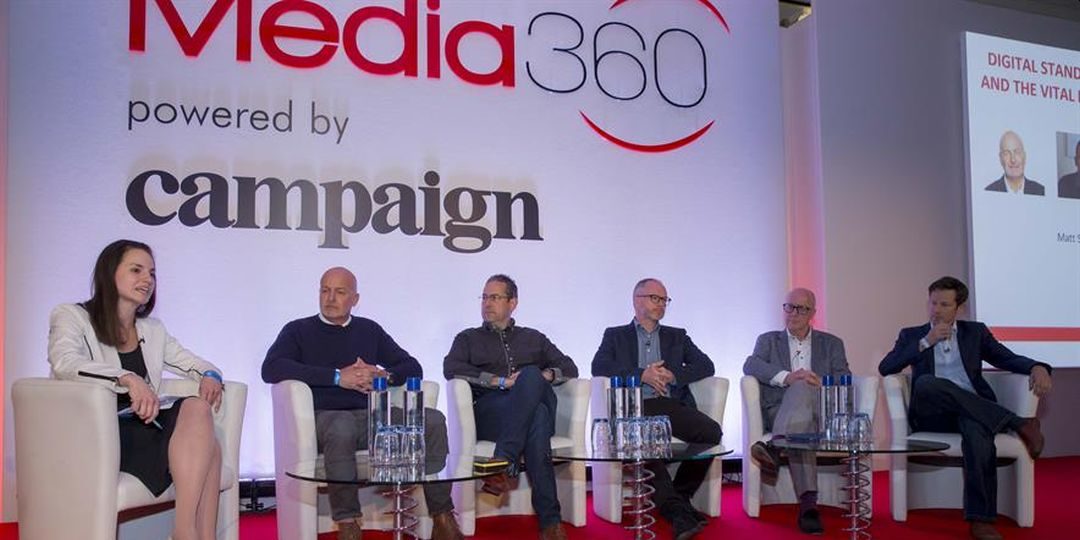
    In the pursuit for more data, more numbers and more measurement, perhaps the industry has forgotten that it markets to people, not machines, Medialink’s senior vice-president, Nick Manning warned at Media360

    Campaign 18th May 2018

    “Perhaps the ‘Mad Men’ were not so mad after all. We don’t advertise to machines, we advertise to people and these people are pushing back on being treated as a product. There is a swing back to the fundamental truths of advertising,”

    Manning said

    “We need to get back to what makes advertising really powerful and it’s not in the demographics, it’s how you speak to people.”

    This concern that too much measurement is causing clients to question if advertising even works isn’t true for Mondelez, Matt Stockbridge, growth analytics manager for the brand, said

    “We’re increasing our ad spend across each year and investing more in digital, social and more in traditional as well – it’s not a barrier.”

    In terms of the measurement environment, Stockbridge believes things are getting better

    “We have great partnerships and the conversations around measurement is a good thing – as long as it doesn’t descend into a slanging match around viewability and size of screen.”

    The overreliance on data may also be driving the industry to be “precisely wrong rather than roughly right”, an audience member pointed out.

    “There is a correlation between the rise of targeting and the decrease of effectiveness,”

    PwC partner Sam Tomlinson, said, citing a study by Enders Analysis.

    On the other hand, Stockbridge, pointed out, there’s a lot more access to advertising now and there may simply be more crap ads.

    “Obviously there is great advertising out there that’s justifying spend or we wouldn’t keep spending on it. It’s a question of balance,”

    https://www.campaignlive.co.uk/article/medialinks-manning-ad-industry-gone-far-down-maths-route/1465087

  • An Open Apology on Behalf of Data

    An Open Apology on Behalf of Data

    A voice against the rising tide of antipathy

    LinkedIn 24th July 2017

    Hi there,

    It feels like it’s the right time to say something as I seem to be causing all that is wrong in Advertising these days and I’m very sorry. I didn’t realise that all the time I was trying to measure stuff, that what I was actually doing was causing problems. I didn’t know I was encouraging everyone to think short term or if indeed whether they actually needed to think at all. It is quite clear that I need to change but I need help. For too long now I’ve just been used to measuring stuff just because I kept getting asked to. I then get told off because I’m either not measuring the right thing or what I am measuring is not want you wanted me to measure in the first place. Lots of people have been having a pop at me saying I’m racist, ageist and overweight. I wish I knew how I could be better? I wish I knew how to behave better? The trouble is that no one wants to engage with me. No one wants to take to the time understand what it is I’m showing. They just assume that all I want to do is to kill creativity somehow. They say that the fact that more and more advertising spend is going Digital is evidence of this. They say that the growth in Social media has reduced quality. I suppose that must be my fault too? In response to all of the problems that I’ve created it seems that the most common response is to aggressively give up.

    I’m particularly nervous about the future too. It’s only machine learning but once someone called it artificial intelligence, it seemed to cause a problem. The more I learn, the more it’s assumed that eventually I’ll decide that it’s probably best if I make all the decisions. Everyone seems to forget that no matter how clever or brilliant the processors become, all I can do is process information, and make calculations. I can’t feel and I’m not sure that I want to. I can’t think, I can only provide probabilities.

    One thing that I have seen over the years is that those that have faced any kind of trial and have succeeded have usually been the ones that have adapted, have learned and have moved on. I’m constantly being asked to evolve, I guess the question is whether everyone who hates me is willing to or not? Maybe there are people who have been misusing or misquoting my work and if that is the case, I can only apologise again. My question is anyone brave enough to apologise to me for all the abuse I’m getting?

    Yours Sincerely
    Data

  • Mondelez: ‘We welcome a bit of ad blocking’

    Mondelez: ‘We welcome a bit of ad blocking’

    Mondelez International is relaxed about the immediate threat of ad blocking, believing that as long as it works to produce content that people want to should see its media strategies continue to be effective.

    The Drum 1st March 2016

    While many of its peers are sweating as ad blockers proliferate, the Cadbury owner is calm; it pays millions to the likes of Facebook, Google and Twitter to ensure its content is viewed via paid native ads and what’s more believes other channels like TV, radio and outdoor ensure that its brands are in front of enough people.

    “Are we worried about ad blocking? No, not really. We’re fortunate in that we create greate content that people want to see… and so hopefully if something does pop up unexpectedly then they might want to look at it,”

    said Matt Stockbridge, analytics manager at Mondelez at Newsworks’ Shift event earlier today (1 March).

    “We are relying a little on the platforms or the agencies’ credentials [to ensure] that the content is going where it needs to be.”

    The dangers of that slightly removed approach to distributing content were brought into sharp focus last month when Mondelez sponsored a negative story on the Guardian about rival Nestlé. The snacks business admitted it did not have any say in the writing of the story, a stance indicative of how many native content deals are structured now.

    That stance chimes with the company’s wider move to become better at producing ads that people are willing to pay for, from TV shows to articles. Stockbridge added that, while deemed a “small part” of the wider challenges Mondelez marketers face, it is spending more to address its growth in “platforms and areas where “we’re pretty sure the message is going to get to the audience that we want to reach.”

    “We welcome a bit of ad blocking if the content we’re creating then rises to the surface and all that horrible stuff stays below us so that we in turn get a bigger share of voice,”

    claimed Stockbridge.

    “We’ll start worrying about ad blocking when we can’t watch TV, look at posters, read newspapers and listen to the radio.”

    One side-effect of trusting technology companies like Google and Facebook is that Mondelez is getting more data on the effectiveness of its ads.

    “Whereas two or three years ago we relied completely on the media agency to provide the information, those platforms are keen to share their data as well. It’s meant that there’s now this interesting conversation happening between the media agency and the platform about what’s actually being served and what’s been paid for,”

    added Stockbridge.

    Mondelez’s relaxed view to ad blocking chaffs somewhat with that held by Google et al, with those companies at risk of losing much more should ad blockers to continue to proliferate without them having a robust counter-measure.

    https://www.thedrum.com/news/2016/03/01/mondelez-we-welcome-bit-ad-blocking

  • How Mondelez wants its digital partners to pitch for business

    How Mondelez wants its digital partners to pitch for business

    Mondelez’s growth analytics manager, Matt Stockbridge, is tired of being pitched by digital advertising companies that don’t understand the FMCG giant’s challenges.

    Campaign 12th October 2016

    Speaking at IAB Engage 2016, Stockbridge mocked the language of digital companies that cold-call him. Mondelez is open to pitches from digital advertising companies, he said, but they need to be aware of the company’s challenges.
    Here he outlines four key challenges prospective digital partners need to be aware of.

    Innovation in FMCG is tough

    “We get accused of not moving fast enough,” says Stockbridge. “But all I have known about this business is constantly changing and evolving.”He pointed to the failed takeover of Hershey as an example. “It’s not happened, it may happen in future – it’s constantly changing,” he said.
    Mondelez also has less leeway than other categories, he added. Stockbridge pointed out that a car manufacturer that spends $1m advertising a $25,000 car only needs to sell a few vehicles to see a strong ROI. “It’s more difficult for us – we have a massive range of brands,” he said, adding that Mondelez targeted “incremental growth”.
    He said it is rare for an FMCG brand to continue growing past its first year. He pointed to Belvita, the breakfast biscuits that rival standard cereal. “It’s targeting breakfast on-the-go, where there are lots of established brands,” he said. Belvita has continued to grow beyond its first year, he said before quipping, “Anyone from Kellogg’s here?”. Another example of innovative marketing is Mondelez’s Creme Egg Cafe, launched in January. Tickets sold out fast, despite continued press criticism over the changing taste of Cadbury’s chocolate since its acquisition by Mondelez.

    Despite the coverage of Oreo’s outdoor eclipse campaign, such stunts don’t yield much in terms of immediate sales, Stockbridge said. “It’s all very well talking about instant returns, 100 clicks and this that and the other,” he said. “For what we’re trying to make, the products are not particularly expensive, so we have to drive a lot of sales. “A lot of advertising spend in 24 hours probably isn’t going to provide a big return. That doesn’t mean we don’t do it, it’s about finding balance.” He added that Mondelez is “absolutely” investing in digital, pointing to the company’s partnerships with Facebook, Google and Twitter.

    Supermarkets are squeezed

    Mondelez’s margins are constantly squeezed by the fact its items are often sold discounted. Stockbridge illustrated his point by showing a pile of Oreo packets discounted and stacked next to a full-priced pile of Quavers. “It’s how to understand the balance of consumers, what’s happening at the discounters, and how that effects price, value and the decisions customers make in-store,” he said. The confectioner also has to consider where growth is coming from in groceries – Aldi and Lidl – without contributing to the issues of its biggest customer, Tesco’s.

    How people buy snacks hasn’t changed

    Despite the growth of online shopping and increasingly “frictionless”, on-demand options such as the Amazon Dash button, ecommerce is difficult for a firm like Mondelez.
    “We want to sell our stuff online if we can find a profitable way of doing it [but] the traditional way people buy snacks hasn’t changed,” Stockbridge said, adding that ecommerce was “difficult” for retailers to do well. Nonetheless, he hinted there could be a Cadbury’s Dash button in the works.

    https://www.campaignlive.co.uk/article/mondelez-wants-its-digital-partners-pitch-business/1412017

  • Test, learn and partner: Mondelez on how to foster a culture of effectiveness

    Test, learn and partner: Mondelez on how to foster a culture of effectiveness

    Being willing to experiment, thinking long term and appreciating the value of old and new media channels alike are all part of a successful approach to effectiveness, Mondelez’s Matt Stockbridge says

    Campaign 25th July 2018

    Small and big agencies and some of the biggest names in adland have their fingers and toes crossed for victory, after the IPA shortlisted 38 campaigns for the Effectiveness Awards, which take place this autumn.

    It got me thinking about effectiveness beyond awards, as an intrinsic part of business culture and what can marketers do towards growing a culture of effectiveness?

    Back at the end of the noughties I was very excited about my new role at Cadbury and even more excited about all that we were planning as a sponsor of the London 2012 Olympics.

    We were investing in initiatives above, below and through the line and part of my job was to evaluate these efforts.

    The goal was to drive a legacy. The feeling was that this was probably a one-off opportunity for us to engage with a huge market locally.

    However, this created a challenge: how do you measure a legacy? How do you know if you’ve created one and how much revenue is it worth?

    The answer to all of this would take a much longer article than this but one thing is very clear now.

    We’ve been able to apply a number of learnings from and since the Olympics, which have been applied in our first year of partnership with the Premier League.

    Over the last few years we have steadily been growing a culture of effectiveness in our business, which is now consistently driving real and measurable business results.

    Based on much of what you read in the marketing press we are supposed to be spending less on advertising, spending less on TV (because it’s, at best, not being watched or is dead), spending more on digital, creating more content in house, killing the agency model and destroying creativity through big data.

    So far we’ve managed to avoid doing all of these things and, in most cases, have done the opposite while building a healthy culture of effectiveness.

    The approach to creating great campaigns is not exactly rocket science and isn’t in need of reinventing despite many people seemingly being intent on doing so.

    As soon as you start with the channel or being deliberately “digitally” led, you are immediately potentially limiting your success.

    The combination of the story or idea, the audience and finally the channels pays back on far more occasions than the other way round.

    An added element for more impulsive, snacking brands like ours is how to involve our customers in the process too.

    For the Premier League activation in particular, this has been an essential part of our efforts.

    Test and learn

    We don’t always get it right and not every one of our campaigns drives a record-breaking ROI. We can’t always explain why every element of a campaign works even if we know what the ROI is.

    But this is liberating as it allows us to have a test and learn culture and to work with many partners who are constantly helping us to evolve and develop how we advertise.

    Over the last couple of years, as well as Facebook, Google, Twitter and Snapchat, we’ve also worked with likes of Oath, Mumsnet, Spotify, Buzzfeed and Match.com.

    At the same time we’ve done specific activations with The SunThe Daily Mirror and Global Radio.

    This allows us to incorporate different thinking and create specific content to reach new audiences.

    Great work doesn’t always drive a short-term uplift in sales and neither should it be expected to.

    There should be room in your plans to do both and not one at the expense of the other.

    Looking at ROI in relative terms

    Another evolution in our thinking is in moving away from seeing an ROI in absolute terms but rather how can we improve it.

    This allows an even playing field across all of our brands and categories across our region and helps to focus our efforts on growth.

    It’s easy to get lost in a debate around why an individual ROI is higher or lower than the expectation but it’s far more productive to talk about how it’s evolved from one year to the next.

    How did the plans change, was the creative the same, was it optimised for the channel that was used, how many impressions, cost per point?

    The answers to all of these questions are helping us to make better decisions and build learnings, which identify what sort of campaigns are more likely to drive better results.

    Working with partners

    We are also keen to be involved in healthy ongoing conversations around wider issues of brand safety, transparency and measurement.

    We welcome being a part of the work that ISBA and the IPA are doing to improve things from an industry perspective.

    It’s also encouraging to hear about the work that the IAB, Newsworks, Thinkbox and Radiocentre have been doing to help build an understanding of how consumers respond to advertising.

    A lot of this work doesn’t necessarily create headlines but it certainly helps nail the point that long-standing media channels have somehow become dated or unsound.

    My view remains that a culture of effectiveness in a client will allow all media channels to play to their strengths.

    https://www.campaignlive.co.uk/article/test-learn-partner-mondelez-foster-culture-effectiveness/1488618

  • Meet the CMOs taking time out before securing their next role

    Meet the CMOs taking time out before securing their next role

    A growing number of CMOs are leaving their roles without a new position to go to. What is their rationale?

    Marketing Week 29th January 2020

    Marketing is a demanding career and, if you’ve been in senior posts for many years, there can come a time when you need to take a step back.

    For some people it is not simply enough to just change jobs. Instead they feel it necessary to remove themselves completely from the day-to-day rigour of working for a leading brand, even without a new job to go to. Such a move can appear to others as an incredibly brave, if risky, career decision.

    But is it? We ask four senior marketers why they have left their posts in the past few months and what they plan to do next.

    Matt Stockbridge’s LinkedIn profile simply says: “Taking a Break”. Like many senior marketers who have left their jobs without a new one to take up, Stockbridge is not overly worried. He has just left his role as analytics lead at Mondelēz International, where he spent almost nine years. He had become frustrated. Three times he applied for a new role internally and on each occasion the position was offered to an external candidate.

    “I just thought it was time to move on, nothing against the company,” he says. “I feel I need to rest, reset and restart my career.”

    Stockbridge comes from a research background, having previously held a senior business insight role at Cadbury and led consumer insights at Kantar Worldpanel, where he spent 17 years – if you include his time at TNS UK. He does not consider his latest career decision to be particularly bold.

    “People look at what you do from their own perspective, but they do not walk in your shoes,” says Stockbridge. “I have been working since I was 14 and I have always spent a long time at the companies where I have worked. I’m now looking for more flexibility.”

    He expects to be drinking a lot of coffee as he networks tirelessly over the coming weeks.

    “I have given myself three months, but I’m very relaxed about things. I am just crystallising my thoughts. I might even do something completely different such as find a house to do up and turn it into an Airbnb property. Who knows?”

    Stockbridge says the fact many senior marketers are choosing the same path is a reaction to the uncertainty in the economy over the past three years. This has led to stagnation in the marketing industry as brands wait for things to happen. While younger marketers are prepared to bide their time, older ones have got itchy feet.

    “My advice to others would be to try other routes first, such as applying for moves internally, ensure you can afford to just leave and be confident enough to buy yourself enough time to really benefit from a break from the industry,”

    Marketingweek.com/cmo-taking-time-out

  • Does your advertising pass the ‘give peas a chance’ test?

    Does your advertising pass the ‘give peas a chance’ test?

    If you have had success with a campaign it is tempting to over-analyse and post-rationalise. Don’t. Just move on and get some perspective

    Marketing Week 19th February 2020

    Until September 2018, a railway bridge on the anti-clockwise section of the M25 between junctions 16 and 17 carried the graffitied slogan, ‘Give peas a chance’. This light-hearted message had not fallen foul of rules on obscene or offensive slogans and its disruptive nature enlivened the daily commute for many.

    It was an example of creating work that was interesting, shareable and prompted an emotional response. It still has a Facebook group with more than 9,000 followers. Rumour has it the work featured only the word peas to begin with, which at least suggests some collaborative testing and learning took place before the slogan was complete.

    Maybe the next time you are considering a new campaign, you might want to apply the ‘Give peas a chance’ test to see if it will fly. Try asking the questions: is it easy to like? Is it clever? Does it stand out? Is it inoffensive (or does it offend the right people)? And does it allow others to iterate and improve the work?

    At Mondelēz, we got Oreo to “sponsor” the lunar eclipse in 2015 by cover wrapping The Sun newspaper. At the time, there were very strict global guidelines around how the brand was positioned and supported, and this idea didn’t really fit in that context.

    The idea then evolved into actually showing the eclipse ‘live’ on digital screens. We got lucky, the weather was so bad the Oreo ‘exclipse’ may have got more coverage than the actual one. It was a great campaign that definitely passed the give peas a chance test.

    If you believe the naysayers, your chances of creating great work nowadays are pretty slim. Many voices in the creative industry have declared that we are all doomed. Advertising legend John Hegarty told Marketing Week in 2018 that

    “Data is killing creativity and creativity is the most important driving factor in ad success and response”

    I don’t agree, data isn’t killing creativity but crap ads might be. It also doesn’t matter how amazing your ads are if no one sees them. Arguably, reach and brand size are therefore more important drivers. In an equal playing field creativity can be the biggest driver, but the field is rarely equal.

    One of the most respected figures in publishing, Hearst’s Joanna Coles, went a step further recently, declaring

    “People hate advertising. What’s more,she said, it is all the fault of brands”

    The truth is that truly great work, like an artist’s masterpiece, is often not a repeatable success. How many great films, books and albums have not been bettered? Businesses are built on the need to grow and advertising, fortunately or unfortunately, can play a key role in this. This should be an opportunity for doing more great work and not just an excuse to harp on about why things are not like they used to be.

    Marketing is a tough job and getting tougher. The power and even the point of brands is being challenged. There needs, therefore, to be a shift in thinking, attitude and approach on all sides to improve the industry.

    Orlando Wood, chief innovation officer at System1 Group, has written an excellent book, Lemon, on the issues that I’ve highlighted and suggests that a renaissance could be on the way. At the end of the book he’s written a manifesto for agencies, which it would be great to see them sign up to.

    Whether your agency signs up or not, here is what you need to challenge your partners with:

    Always work to a written brief to hold everyone accountable

    Possibly the least interesting or fun part of the process but so important. These are best put together collaboratively. Lean on your agencies for this and make sure you all agree that they pass the give peas a chance test.

    Keep it simple and easy to explain by keeping it to just a few sentences, creating a lens through which any ideas and suggestions can easily be tested.

    Only work with people who are as passionate about your brand as you are

    Once a creative person has an idea or a view, they are way more experienced at defending their point of view than the humble client. In larger agencies, there are plenty of other decision makers for them to lean on than you.

    “There’s nothing wrong with awards but please don’t make them the reason for doing the work. You are in the business of selling products or services, any recognition on top of this is a bonus

    If someone leads you down the wrong creative path once then more fool them. If you work with them again on another campaign then more fool you. Remember, you will be left carrying the can if the campaign bombs.

    Beware the illusion of choice

    I remember this happened at Mondelēz on a largely forgettable campaign for a new product we were launching. We got into a position where faith in the output was gradually draining on all sides.

    In order to try and build some enthusiasm for the campaign, we were asked to choose which music should back the ad. It was pretty obvious which was the preferred option. It was the process, however, that got the brand team back involved and enthusiastic about it to an extent.

    Know how the work supports the brand so you can convince others

    I mention this because quite often I’ve seen additional ideas and ‘opportunities’ pop up, often once a larger campaign has been agreed and signed off. Multiple channels with the right creative can help increase the reach and frequency of your message but sometimes the link between these is not clear.

    On one occasion at Mondelēz we were a few months into a new campaign and someone suggested we could do a specific activation targeting a group of people who would be fasting. An interesting thought but there didn’t seem to be an obvious link with the wider work we were airing.

    While this conversation was playing out, a voice somewhere in the background in agency land pointed out that this could be award-winning work. Whether this was what was actually said I don’t recall but it did rather help to explain our concerns over what the activation would do for the brand.

    Nothing wrong with awards but please don’t make them the reason for doing the work. You are in the business of selling products or services, any recognition on top of this is a bonus.

    If something really flies, keep it flying

    Surely one of the ways of halting the surge in short-termism is for campaigns that are showing initial, measurable success to be continued. Views on measuring long- and short-term activity are evolving but one thing all econometric experts will tell you is that in order to have a long-term impact, your campaign has to have a good short-term return.

    In other words, if your campaign is crap to begin with, it probably isn’t going to become less crap if you keep on airing it.

    I recall one time when we had copy that was performing well but had second copy lined up that we were doubting. In the end, we decided to just air the same copy three times. In campaigns I have worked on, ROI tends to improve over time.

    You can help this by shortening the copy length to focus on distinctive parts of the copy. Once we did the full econometric testing of all of the airings, it turned out the third burst was the best performing.

    How does the latest campaign build on the previous one and open the door to the next one?

    This has become a drum I’ve ended up beating a lot. To be fair to those in agency land, this is something clients need to take better ownership of. Yes businesses work on quarterly and year end reporting but advertising needs to get out of thinking in these cycles.

    I can count on the fingers of no hands how many media plans I’ve seen that run for more than 12 months. This is not helped by the constant change in personnel. In my time at Mondelēz I had nine bosses in 10 years. Organisations with a matrix structure rarely promote from within and will therefore always struggle with continuity. A new brand manager arrives at least every 18 months or so and, of course, will want to do something new, different and better than before to stand out.

    “Look at most people’s LinkedIn profiles and you’ll see that they collect brands like Panini stickers. We see value in breadth rather than depth”

    Revolution is often preferred over evolution and is often passed off as being disruptive. The sensible brand building lessons preached by Byron Sharp et al suggest the need for continuity and leveraging distinctive assets to grow brands. This is also supported by findings in the aforementioned Lemon.

    There doesn’t seem to be any value in being the guardian of a brand for a long period of time regardless of which side of the fence you sit. Look at most people’s LinkedIn profiles and you’ll see that they collect brands like Panini stickers. We see value in breadth rather than depth.

    With all this churn driving so little consistency, is it any wonder trust and love for advertising is waning? There has to be a better way of providing variety and interest to keep things fresh while rewarding those who are willing to commit to a brand for more than just a few months.

    Don’t disappear up your rear

    You’ve aired the work, you’ve won the awards, you’ve reinvented advertising, created a new platform or some other version of alchemy. Congratulations to you, go and have a biscuit.

    Once you’ve polished your awards and adjusted the LinkedIn profile to include your new entry in to the industry’s latest most influential, up and coming, hot list, the work really starts.

    Nothing wrong with such plaudits at all. The problem is that you might be enjoying a time you might look back on as the good old days.

    You can cement this by writing a book or doing endless conferences about it or maybe even set up your own business. As time passes, you can then moan about the fact everything is rubbish now and share details of the great campaign you did back in the day.

    As Tennyson said: “It’s better to have loved and lost than never to have loved at all.” But surely marketers want a better legacy than that?

    The reasons something becomes great is a combination of many factors. This is part of the magic. Once you’ve had some success, don’t over analyse and don’t post-rationalise. Just move on and get some perspective.

    Remember, it’s only an advert for chocolate, frozen peas, an energy provider or a betting company.

    www.marketingweek.com/matt-stockbridge-keep-calm-and-keep-advertising