
Here I was asked to share about one of our first major foray in to user generated content. This was the first time we had put the public in charge of coming up with a new chocolate bar flavour and brand name
FUTR Conference 2019
Skip to PDF content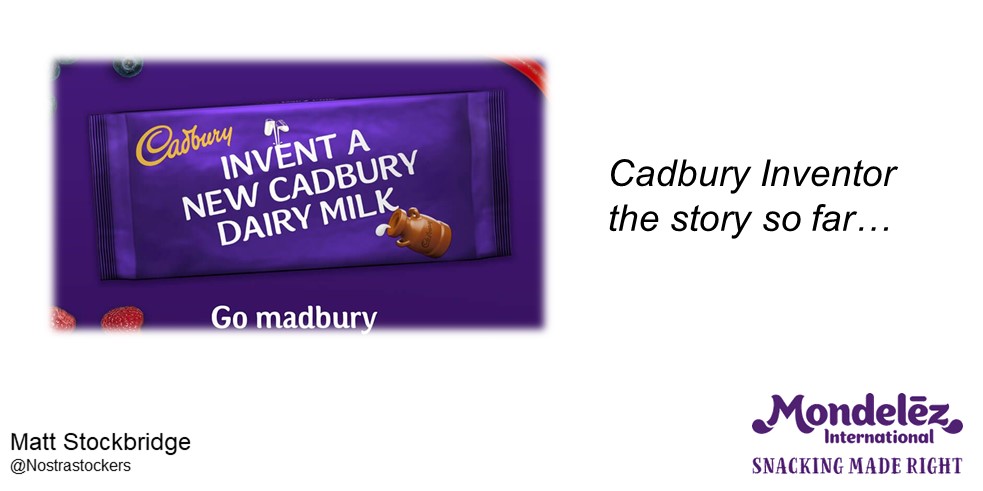
Here I was asked to share about one of our first major foray in to user generated content. This was the first time we had put the public in charge of coming up with a new chocolate bar flavour and brand name
FUTR Conference 2019
Skip to PDF content
Obviously if I called it some ideas to make your media work better then it would not have been very catchy. This presentation was inspired by my essay on how to use TV and Digital more effectively for The WARC Admap prize which you can also view here. I remember spending some time at the begining arguing the case for the use of multiple apostrophes in the title, it was a grammar pedant’s heaven or should that be pedants’
DMX Dublin 2017
Skip to PDF content
Mondelez International is relaxed about the immediate threat of ad blocking, believing that as long as it works to produce content that people want to should see its media strategies continue to be effective.
The Drum 1st March 2016
While many of its peers are sweating as ad blockers proliferate, the Cadbury owner is calm; it pays millions to the likes of Facebook, Google and Twitter to ensure its content is viewed via paid native ads and what’s more believes other channels like TV, radio and outdoor ensure that its brands are in front of enough people.
“Are we worried about ad blocking? No, not really. We’re fortunate in that we create greate content that people want to see… and so hopefully if something does pop up unexpectedly then they might want to look at it,”
said Matt Stockbridge, analytics manager at Mondelez at Newsworks’ Shift event earlier today (1 March).
“We are relying a little on the platforms or the agencies’ credentials [to ensure] that the content is going where it needs to be.”
The dangers of that slightly removed approach to distributing content were brought into sharp focus last month when Mondelez sponsored a negative story on the Guardian about rival Nestlé. The snacks business admitted it did not have any say in the writing of the story, a stance indicative of how many native content deals are structured now.
That stance chimes with the company’s wider move to become better at producing ads that people are willing to pay for, from TV shows to articles. Stockbridge added that, while deemed a “small part” of the wider challenges Mondelez marketers face, it is spending more to address its growth in “platforms and areas where “we’re pretty sure the message is going to get to the audience that we want to reach.”
“We welcome a bit of ad blocking if the content we’re creating then rises to the surface and all that horrible stuff stays below us so that we in turn get a bigger share of voice,”
claimed Stockbridge.
“We’ll start worrying about ad blocking when we can’t watch TV, look at posters, read newspapers and listen to the radio.”
One side-effect of trusting technology companies like Google and Facebook is that Mondelez is getting more data on the effectiveness of its ads.
“Whereas two or three years ago we relied completely on the media agency to provide the information, those platforms are keen to share their data as well. It’s meant that there’s now this interesting conversation happening between the media agency and the platform about what’s actually being served and what’s been paid for,”
added Stockbridge.
Mondelez’s relaxed view to ad blocking chaffs somewhat with that held by Google et al, with those companies at risk of losing much more should ad blockers to continue to proliferate without them having a robust counter-measure.
https://www.thedrum.com/news/2016/03/01/mondelez-we-welcome-bit-ad-blocking