
Here I was asked to share about one of our first major foray in to user generated content. This was the first time we had put the public in charge of coming up with a new chocolate bar flavour and brand name
FUTR Conference 2019
Skip to PDF content
Here I was asked to share about one of our first major foray in to user generated content. This was the first time we had put the public in charge of coming up with a new chocolate bar flavour and brand name
FUTR Conference 2019
Skip to PDF content
Obviously if I called it some ideas to make your media work better then it would not have been very catchy. This presentation was inspired by my essay on how to use TV and Digital more effectively for The WARC Admap prize which you can also view here. I remember spending some time at the begining arguing the case for the use of multiple apostrophes in the title, it was a grammar pedant’s heaven or should that be pedants’
DMX Dublin 2017
Skip to PDF content
The idea was for an Advertiser, Agency, Publisher and Politician would share for 5 minutes each on their view of trust. Unfortunately the Politician couldn’t make it but here is my offering
UKOM event 2017
Skip to PDF content
Another presentation that argues that data alone and creativity alone are not guarantees of success but the harmonious use of both might be
A Conference 2017
Skip to PDF content
M&S on why it doesn’t target by age and Mondelez talks about the balance between data and creativity.
Marketing Week 5th October 2016
Marks & Spencer doesn’t want to “judge people by age” and instead uses data from its members club and loyalty programme Sparks to identify customers by attitude.
Speaking at the Festival of Marketing today (5 October) head of CRM and loyalty at M&S, Ryan Davies explained
“It’s more important for us to market based on attitudes and products you are interested in”
He told delegates that the brand’s targeting is based on a combination of attitudes, purchasing frequency and customer journeys, which has “nothing to do with age” and “everything to do with how we talk about products and the content we put around those things”.
The brand is hoping to use this interest-based targeting to encourage customers to shop across the business, for example food then over to clothing and vice versa.
If we can move the food shoppers into becoming clothing shoppers then we have opened [that person] up to two categories so we have twice as much of a chance they will come back and shop with us.
But this process will take time, according to Davies, who is six months into the role. He also told the audience that he wished he knew “how big and complex the organisation” was before starting and that “coming in and thinking you are going to change the world in two months doesn’t work out”.
For the 133-year-old business, Davies said it will take time to go from mass offers to personalised dealsthat are less restrictive and reward its customers. “It’s a journey and not a big bang,” he concluded.
Union is an artisan coffee roaster built on offering maximum returns to its growers. It was established in 2001 to combat historically low global coffee prices and to combat the subsequent negative impact on the local communities in the likes of African which rely on the coffee trade.
And speaking on the Realising Your Potential Stage today (5 October), Jeremy Torz, founder and MD of Union Hand Roasted Coffee, warned that achieving true brand purpose takes patience.
Tori was quick to hit out at the major coffee giants, which “act like being FairTrade-compliant is a job well done.”
He joked: “I would rather companies paid more for coffee rather than getting a cheap deal and then having a big marketing budget and partnering with WWF or webcams for rainforests.
“Most consumers don’t know what FairTrade means either. Does it mean the price paid to growers is aspirational or minimum wage? In my experience it is the latter. At the end of the day, consumers realise empty promises straight away. They want real purpose.”
Achieving real purpose and the profitability that comes with it also takes a long time, according to Torz.
He added: “The difference between a business founded with social purpose versus a legacy business is key, as if you’re the latter it is harder to be trusted and understood.
“If you want to make a social impact then it needs to be something you keep on backing. Not everything comes back with an immediate media sale. It has taken us years to build a supply chain in Africa and to change people’s lives. It doesn’t happen over night.”
The ability to use data creatively is the key to devising marketing that is not only personalised, but highly relevant to the customer journey.
Speaking at the Festival of Marketing 2016, Mondelez International growth analytics manager Matthew Stockbridge argued that data does not mean the death of creativity, rather that drawing on the right insights creates a stronger and more relevant campaign.
“I’ve had wonderful discussions with someone on the creative side who will say, ‘if I have any kinds of boundaries in terms of data then you’re killing me creatively.’ But at the end of the day we still need to drive value for shareholders and sell bars of chocolate,”
“Creating amazing campaigns that win lots of awards at Cannes are great and we like to do that, but what we also like to do is sell some products”
Matthew Stockbridge, growth analytics manager, Mondelez
“I fundamentally believe that if you squeeze the creative process something really clever can come out of it. I don’t think the absence of barriers and rules makes the creative better at breaking through. We can still do epic creative work, but you’ve got to think how things are changing.”
Speaking on the same panel, managing director of the Direct Marketing Association (DMA), Rachel Aldighieri, advised marketers not to get caught up in the data and lose focus on the craft that creates great marketing.
“It’s about taking a customer centric approach, as opposed to saying how much advertising can we get out there. We talk more about relevancy, not necessarily personalisation. We also talk a lot about craft. People block ads if they’re not entertaining and they don’t want to engage with them.
“Instead put more focus on the craft. Data and technology is obviously hugely important, but the creative is really important,” she added.
The payment piece around influencers continues to cause controversy, according to Heather Mitchell, global PR and social media director, haircare at Unilever.
“Five years ago brands weren’t paying influencers as much as they are now and I think some people questioned that,” she said. “We shouldn’t expect influencers to create things for us or talk about our products for free.”
While Unilever will not stop advertising its mass reach products through traditional channels like TV and print, its focus is shifting to influencer-created content, she said.
Mitchell believes brands should now be paying influencers and content creators in the same way they used to pay publishing houses “quite frankly because their reach is much bigger but also because their credibility is even stronger”.
While the number of influencers vying for consumers attention continues to rise, Mitchell suggests we are beginning to reach a tipping point. She predicts a lot of influencers making a name for themselves today will not be around in a few years time as they are not adding value to consumers’ lives.
“If I’m completely honest, as a consumer, there are a lot of influencers I’ve stopped following. I don’t care that you were at Fashion Week again. How are you actually adding value to my life? It’s going to be survival of the fittest. The ones that are continually connecting with their audience, are engaging with them and sharing their personality are the ones that will continue.”
Festival of Marketing 2016: The top takeaways from M&S, Mondelez and Unilever
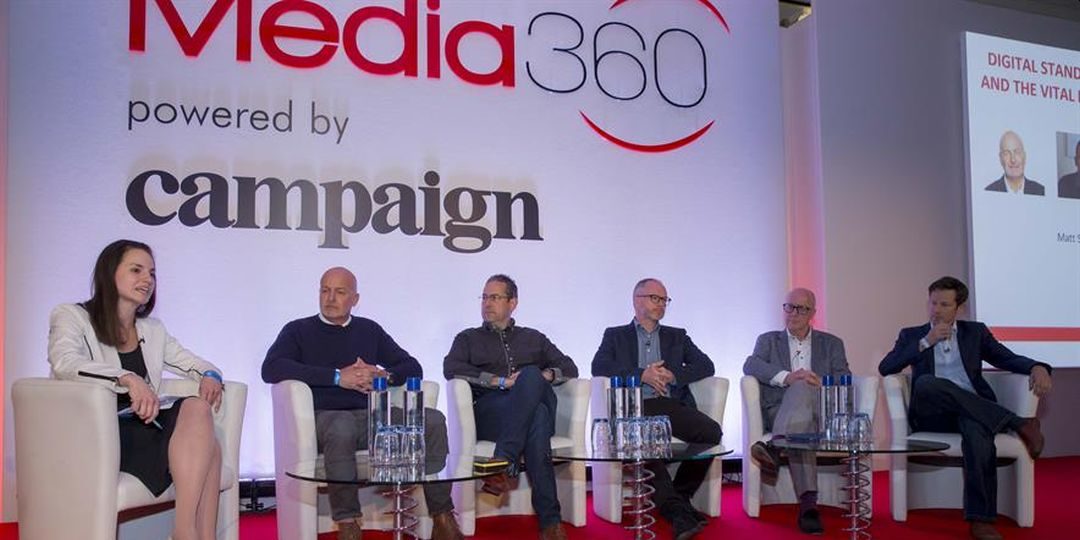
In the pursuit for more data, more numbers and more measurement, perhaps the industry has forgotten that it markets to people, not machines, Medialink’s senior vice-president, Nick Manning warned at Media360
Campaign 18th May 2018
“Perhaps the ‘Mad Men’ were not so mad after all. We don’t advertise to machines, we advertise to people and these people are pushing back on being treated as a product. There is a swing back to the fundamental truths of advertising,”
Manning said
“We need to get back to what makes advertising really powerful and it’s not in the demographics, it’s how you speak to people.”
This concern that too much measurement is causing clients to question if advertising even works isn’t true for Mondelez, Matt Stockbridge, growth analytics manager for the brand, said
“We’re increasing our ad spend across each year and investing more in digital, social and more in traditional as well – it’s not a barrier.”
In terms of the measurement environment, Stockbridge believes things are getting better
“We have great partnerships and the conversations around measurement is a good thing – as long as it doesn’t descend into a slanging match around viewability and size of screen.”
The overreliance on data may also be driving the industry to be “precisely wrong rather than roughly right”, an audience member pointed out.
“There is a correlation between the rise of targeting and the decrease of effectiveness,”
PwC partner Sam Tomlinson, said, citing a study by Enders Analysis.
On the other hand, Stockbridge, pointed out, there’s a lot more access to advertising now and there may simply be more crap ads.
“Obviously there is great advertising out there that’s justifying spend or we wouldn’t keep spending on it. It’s a question of balance,”

Matt Stockbridge, Growth Analytics Manager, Mondelez
Our panel debated how to create a marketing effectiveness culture. Barriers we addressed included organisational silos and the ongoing tension between long-term and short-term.

Matt Stockbridge, Analytics Manager, Mondelez
The idea here was for someone that speakers representing Advertisers, platforms and publishers would present their views on AdBlocking and then there was a vote to see who was the most convincing. For the record I came joint second but here are my 5 minutes.

Matt Stockbridge, Account Dirtector, Taylor Nelson Sofres
Back in my Kantar agency days in the Summer of 2006 we were all looking forward to the Football World Cup in Germany. At the time the BBC were looking for any insight they could get for a not entirely inclusive piece about opportunities for companies to sell to World Cup Widows. No matter what I told them about not really having any data on that, the following morning I found myself getting interviewed live on the subject. I wasn’t briefed on what questions I was going to be asked whilst getting a hand massage at the same time for some reason.