
Here I was asked to share about one of our first major foray in to user generated content. This was the first time we had put the public in charge of coming up with a new chocolate bar flavour and brand name
FUTR Conference 2019
Skip to PDF content
Here I was asked to share about one of our first major foray in to user generated content. This was the first time we had put the public in charge of coming up with a new chocolate bar flavour and brand name
FUTR Conference 2019
Skip to PDF content
Obviously if I called it some ideas to make your media work better then it would not have been very catchy. This presentation was inspired by my essay on how to use TV and Digital more effectively for The WARC Admap prize which you can also view here. I remember spending some time at the begining arguing the case for the use of multiple apostrophes in the title, it was a grammar pedant’s heaven or should that be pedants’
DMX Dublin 2017
Skip to PDF content
The idea was for an Advertiser, Agency, Publisher and Politician would share for 5 minutes each on their view of trust. Unfortunately the Politician couldn’t make it but here is my offering
UKOM event 2017
Skip to PDF content
M&S on why it doesn’t target by age and Mondelez talks about the balance between data and creativity.
Marketing Week 5th October 2016
Marks & Spencer doesn’t want to “judge people by age” and instead uses data from its members club and loyalty programme Sparks to identify customers by attitude.
Speaking at the Festival of Marketing today (5 October) head of CRM and loyalty at M&S, Ryan Davies explained
“It’s more important for us to market based on attitudes and products you are interested in”
He told delegates that the brand’s targeting is based on a combination of attitudes, purchasing frequency and customer journeys, which has “nothing to do with age” and “everything to do with how we talk about products and the content we put around those things”.
The brand is hoping to use this interest-based targeting to encourage customers to shop across the business, for example food then over to clothing and vice versa.
If we can move the food shoppers into becoming clothing shoppers then we have opened [that person] up to two categories so we have twice as much of a chance they will come back and shop with us.
But this process will take time, according to Davies, who is six months into the role. He also told the audience that he wished he knew “how big and complex the organisation” was before starting and that “coming in and thinking you are going to change the world in two months doesn’t work out”.
For the 133-year-old business, Davies said it will take time to go from mass offers to personalised dealsthat are less restrictive and reward its customers. “It’s a journey and not a big bang,” he concluded.
Union is an artisan coffee roaster built on offering maximum returns to its growers. It was established in 2001 to combat historically low global coffee prices and to combat the subsequent negative impact on the local communities in the likes of African which rely on the coffee trade.
And speaking on the Realising Your Potential Stage today (5 October), Jeremy Torz, founder and MD of Union Hand Roasted Coffee, warned that achieving true brand purpose takes patience.
Tori was quick to hit out at the major coffee giants, which “act like being FairTrade-compliant is a job well done.”
He joked: “I would rather companies paid more for coffee rather than getting a cheap deal and then having a big marketing budget and partnering with WWF or webcams for rainforests.
“Most consumers don’t know what FairTrade means either. Does it mean the price paid to growers is aspirational or minimum wage? In my experience it is the latter. At the end of the day, consumers realise empty promises straight away. They want real purpose.”
Achieving real purpose and the profitability that comes with it also takes a long time, according to Torz.
He added: “The difference between a business founded with social purpose versus a legacy business is key, as if you’re the latter it is harder to be trusted and understood.
“If you want to make a social impact then it needs to be something you keep on backing. Not everything comes back with an immediate media sale. It has taken us years to build a supply chain in Africa and to change people’s lives. It doesn’t happen over night.”
The ability to use data creatively is the key to devising marketing that is not only personalised, but highly relevant to the customer journey.
Speaking at the Festival of Marketing 2016, Mondelez International growth analytics manager Matthew Stockbridge argued that data does not mean the death of creativity, rather that drawing on the right insights creates a stronger and more relevant campaign.
“I’ve had wonderful discussions with someone on the creative side who will say, ‘if I have any kinds of boundaries in terms of data then you’re killing me creatively.’ But at the end of the day we still need to drive value for shareholders and sell bars of chocolate,”
“Creating amazing campaigns that win lots of awards at Cannes are great and we like to do that, but what we also like to do is sell some products”
Matthew Stockbridge, growth analytics manager, Mondelez
“I fundamentally believe that if you squeeze the creative process something really clever can come out of it. I don’t think the absence of barriers and rules makes the creative better at breaking through. We can still do epic creative work, but you’ve got to think how things are changing.”
Speaking on the same panel, managing director of the Direct Marketing Association (DMA), Rachel Aldighieri, advised marketers not to get caught up in the data and lose focus on the craft that creates great marketing.
“It’s about taking a customer centric approach, as opposed to saying how much advertising can we get out there. We talk more about relevancy, not necessarily personalisation. We also talk a lot about craft. People block ads if they’re not entertaining and they don’t want to engage with them.
“Instead put more focus on the craft. Data and technology is obviously hugely important, but the creative is really important,” she added.
The payment piece around influencers continues to cause controversy, according to Heather Mitchell, global PR and social media director, haircare at Unilever.
“Five years ago brands weren’t paying influencers as much as they are now and I think some people questioned that,” she said. “We shouldn’t expect influencers to create things for us or talk about our products for free.”
While Unilever will not stop advertising its mass reach products through traditional channels like TV and print, its focus is shifting to influencer-created content, she said.
Mitchell believes brands should now be paying influencers and content creators in the same way they used to pay publishing houses “quite frankly because their reach is much bigger but also because their credibility is even stronger”.
While the number of influencers vying for consumers attention continues to rise, Mitchell suggests we are beginning to reach a tipping point. She predicts a lot of influencers making a name for themselves today will not be around in a few years time as they are not adding value to consumers’ lives.
“If I’m completely honest, as a consumer, there are a lot of influencers I’ve stopped following. I don’t care that you were at Fashion Week again. How are you actually adding value to my life? It’s going to be survival of the fittest. The ones that are continually connecting with their audience, are engaging with them and sharing their personality are the ones that will continue.”
Festival of Marketing 2016: The top takeaways from M&S, Mondelez and Unilever
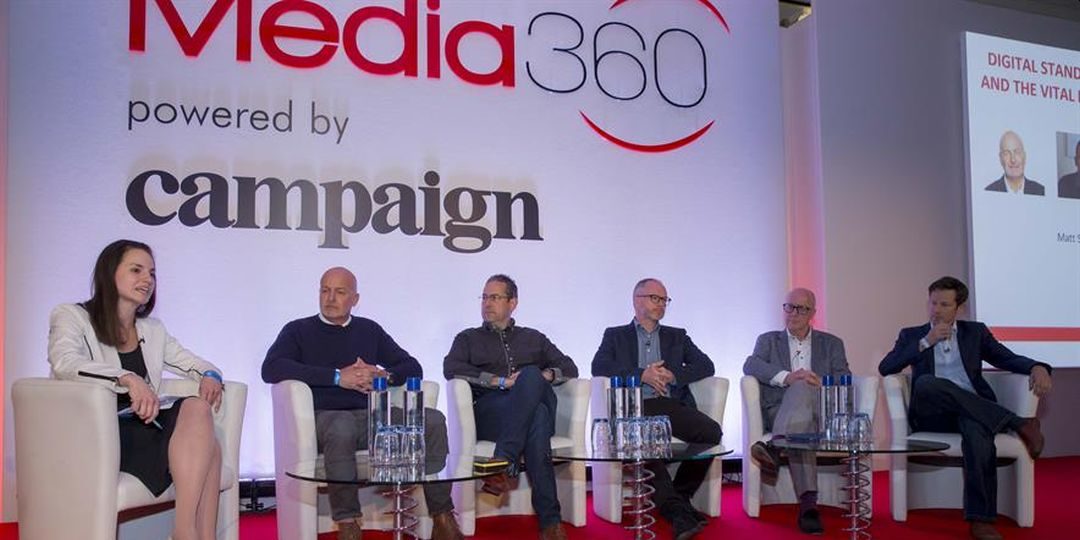
In the pursuit for more data, more numbers and more measurement, perhaps the industry has forgotten that it markets to people, not machines, Medialink’s senior vice-president, Nick Manning warned at Media360
Campaign 18th May 2018
“Perhaps the ‘Mad Men’ were not so mad after all. We don’t advertise to machines, we advertise to people and these people are pushing back on being treated as a product. There is a swing back to the fundamental truths of advertising,”
Manning said
“We need to get back to what makes advertising really powerful and it’s not in the demographics, it’s how you speak to people.”
This concern that too much measurement is causing clients to question if advertising even works isn’t true for Mondelez, Matt Stockbridge, growth analytics manager for the brand, said
“We’re increasing our ad spend across each year and investing more in digital, social and more in traditional as well – it’s not a barrier.”
In terms of the measurement environment, Stockbridge believes things are getting better
“We have great partnerships and the conversations around measurement is a good thing – as long as it doesn’t descend into a slanging match around viewability and size of screen.”
The overreliance on data may also be driving the industry to be “precisely wrong rather than roughly right”, an audience member pointed out.
“There is a correlation between the rise of targeting and the decrease of effectiveness,”
PwC partner Sam Tomlinson, said, citing a study by Enders Analysis.
On the other hand, Stockbridge, pointed out, there’s a lot more access to advertising now and there may simply be more crap ads.
“Obviously there is great advertising out there that’s justifying spend or we wouldn’t keep spending on it. It’s a question of balance,”

Matt Stockbridge, Growth Analytics Manager, Mondelez
Our panel debated how to create a marketing effectiveness culture. Barriers we addressed included organisational silos and the ongoing tension between long-term and short-term.

Twitter Success Stories, December 2019
Key results

With a year of exciting campaigns ahead, Cadbury UK (@CadburyUK) saw an opportunity to boost engagement and increase ROI by once again choosing Twitter as its key platform for launches and promotions in 2018.
The Strategy
Kicking off 2018 with a new brand campaign centred on the theme of generosity, Cadbury launched a First View video showing highly emotional creative to attract immediate attention. It then continued to build momentum with Promoted Video Tweets linked to real-time topics at the tip of everyone’s tongue.
As the football season got underway, Twitter provided the perfect platform for Cadbury to reinforce its sport sponsorship’s, aligning with the Champions League and Premier League for its Big Taste and Match & Win promotions and using short-form video to stay at the forefront of live action events.
When the festive period arrived, Cadbury took to Twitter to engage with audiences through a new Secret Santa campaign. Targeting different parts of the UK, Cadbury asked people to Retweet a daily Promoted Tweet for their chance to win a limited-edition chocolate bar they could send as a gift to anyone they chose.
With Twitter, Cadbury could increase the reach and relevance of its new brand campaign, using both First View and Promoted Video to stay front of mind.
Cadbury used Twitter to capitalise on its ongoing sports partnerships by using sponsorship and short-form video to capture the buzz of real-time events.
3. Create engaging promotions
By asking audiences to Retweet for their chance to win a Secret Santa gift, @CadburyUK boosted campaign interactions and built positive brand engagement.
The success
With Twitter, Cadbury exceeded all ROI expectations for 2018. Its overall ROI of +4 for the year represented a significant 73% increase compared to 2017. Individually, both its brand and Match & Win campaigns achieved an ROI of +4, while its Secret Santa competition achieved an ROI of +3. By following all best practices in terms of creative, targeting, and placement, CadburyUK also managed to reduce CPM by 29% compared to 2017.

WARC Admap Essay Competition Entry (Judges Commended), 5th June 2017
Famous Brexiter Oscar Wilde apparently once said
“The only thing worse than being talked about is not being talked about”
I guess these words provided little comfort to the famed wordsmith when he passed away alone and destitute in Paris aged only 46. If only Twitter had been around then, that would have made an epic tweet. Personally, I’ll also be 46 this year and so before I also head off to obscurity and solitude on the Champs-Elysées, I thought like Oscar, that I’d at least attempt to write something interesting.
By day I’m the not much loved distant cousin of those in Marketing who try and evaluate relationships between Advertising and Sales. Others are available such as awareness, equity, engagement etc however in the world of fmcg, these fine metrics doth butter no parsnips. For Mondelez the plan is that ideally, at some point, post a campaign airing and at least before the sell by date of the product, the viewer of the work feels rather inclined to make a purchase.
Now before I get tweeted to death by the latest batch of Lion gripping luvvies from Cannes, please realise that I’m not the enemy.
I have defended countless campaigns that didn’t necessarily deliver a huge or any uplift in sales. I remember a German campaign where the investment increased by more than 600% from the previous year and yet the brand declined 5%.
Then there was the moment that a once ROI sceptic Marketing Director was given an additional $10m to spend on Advertising based on the latest set of results that I’d shared.

A lot of Mondelez investment has traditionally been on TV however, as with everybody else, an increasing amount is on Social platforms and so I feel qualified to at least offer a reasonable view on how advertisers could make better use of them.
Let’s focus on TV first. Personally, I’ve racked up over 40 years of experience watching it and have bought several. This includes watching in black and white because that was one of the sets my Grand parents had. For any Millennials reading this, first of all, well done for reading and secondly, yes black and white TV was once a thing. I wonder if advertisers back then were encouraged to optimise their content to work with and without colour? These days of course it needs to work without sound, has to mention the product within the first nano second and should also be optimised for vertical viewing.
I have also spent time in front of the camera including being interviewed by BBC news, whilst having my hand massaged for some reason, about the opportunities for companies to sell products to World Cup Widows in 2006.
Back in the day of course, there was just the one commercial channel and no Internet. For 27 years, the only way to advertise on TV in the UK was on one channel. That is worth repeating.
For 27 years you could only advertise on one television channel in the UK.
It wasn’t until 1982 that this doubled to 2 with the introduction of the not so creatively titled Channel 4.
Just thumbing down my On Demand TV guide, my smartphone suggests that there are now 789 channels that I could view before I get to the intriguing regional versions of BBC One. To be honest I’ve never thumbed down that far but this brings me to the first unexpected joyful moment that I’ve had in preparing this. For how long now have I been missing out on the Craft Channel? Sky channel 679 or 818 on Freesat if you want to check it out. I could have been devouring Decoupage with Dawn or Crafting with Dawn Bibby. A quick search later and Google reveals that there are many other presenters including a chap which looks suspiciously like Watford centre forward Troy Deeney but for the moment I’ll leave the Craft channel there before I lose the thread completely.

So what about all things Social?
Well my personal social footprint is growing however I did get concerned when my number of LinkedIn chums overtook the number of Facebook chums. I’m more followed than follower on Twitter and I feel guilty sometimes that my flock are somewhat starved of inspiration. My tweet to follower ratio could do with improvement.

Fortunately, the day job has kept me more up to speed even if my user experience could be more involved. Mondelez has partnerships globally with all of the big boys and we’ve also dabbled with Instagram, AOL, Spotify and Snapchat. Whilst we are at it, what ever happened to Vine? Who knew we’d be missing the day so soon when we had a whole 6 seconds to get our message across over and over again?
Now before you sharpen up your stylus as I reveal my plan for success, let me build a bit more anticipation by firstly explaining what you shouldn’t do.
First of all, don’t get lost in the endlessly tedious audience argument of mass vs more individual targeting. Someone once explained it to me this way.
“If we wanted to make an advert targeting one armed people, we’d also like it to appeal to two armed people”
Now for once, when I heard this, even I was lost for words but Media agencies have spent many years finding audiences, let them get on with it! There is also an increasing expertise within the platforms themselves to help in this endeavor if it’s needed.
Secondly, don’t fixate on the idea that human beings are easily able to explain how they are influenced to make choices. The most compelling way we’ve found to get people to eat chocolate is to give it to them for free. Unfortunately this doesn’t mean that they are immediately loyal to Cadburys and suddenly start seeking out more even if it’s not on promotion.
I hear talk about consumer journeys as if there really was a beginning, a middle and an end. A clear measurable set of steps that lead to an action being taken, you know, a bit like a normal journey. One day maybe, enough of us will, consciously (or more likely unconsciously) agree to having our thoughts and feelings monitored as well as each of the steps we take, the places we go, all the media we consume, what we share and everything we say.

This data will then be analyzed in the moment using clever algorithms that will drive machine learning technology which will then be able to explain what we do and why we do it. This will all be done without the need to actually ask a single human being which would of course be a biased sample and apparently a waste of time anyway as, according to Hugh Laurie’s character in the excellent TV drama House, “Everybody lies”.
Have a look at this visualisation of an alleged digital journey. Whilst this is beautifully formed and presumably based on some observed and credible data, just how accurate, let alone linear is it?

Might Sammy’s journey above also just as likely be explained in the following way?

I expect the technology is probably already there (Google glasses are too expensive and Snapchat Spectacles aren’t designed to capture everything) but it’s possibly a bit too expensive and intrusive to be used at scale yet. Even so, don’t assume that once it does come along, that the key insights are anything other than what we already knew all along anyway.

For example, most decisions about what product you want to buy are made at the fixture and the convenience of where the shop is a higher motivator than whether your particular brand is in it. Think about offering a dog a dog biscuit. You can offer it to him 50 times until you are convinced that he really wants your biscuit. At the last minute, you switch the biscuit for a chocolate button and I’m sure his apparent intent and perceived loyalty will disappear out of the window as he wolfs down the chocolate.
Finally, forget about the idea that somehow advertising stuff like snack foods will lead to you getting some extra, for free, organic additional reach. I remember how we all got rather excited back in the good old days of 2012. We had conversations about splitting out paid, owned and earned. Unfortunately, the third bit, like mother Hubbard’s cupboard, was always bare. It’s not impossible, it’s just unlikely. Remember Candice on Facebook Live in the Chewbacca mask? Now if the manufacturers of that mask had set that up then that would be a fantastic recent exception. I do remember an ad for said mask popping up when the content appeared on Youtube but opportunism doesn’t really count. Having said that, Snapchat are boldly talking about no such thing as a paid impression on their watch so who knows, given an even playing field on that platform anyway, it might be possible again?
Let’s be crystal clear about what TV and Social are
Social media is gloriously unregulated, is consumed and mostly forgotten about in moments (quite literally in the case of Snapchat). Back in the day we would call this word of mouth which was always the most respected of media channels. The only rub was that you couldn’t advertise on or influence it easily. We knew that if someone had a bad experience, then maybe they told 10 people, whereas those who had a good one, only tended to tell 2. Social media is simply an expression of this although some might argue that the ratio of negative to positive is much greater. The zealously irritated can seem to be the most vocal as the more reasonable majority stay silent. The big issue for Social media is what effect this has in the longer term? Increased tribalism, less debate? Maybe a subject for a different essay.
The difference with social media is that now brands like ours can join in as a part of the conversation. Most don’t however and obsess about driving positive comments and not wanting to upset anyone. If you want social to work, you are going to have to deal with the fact that for the most part, people will tend to respond negatively. On the other hand, they are at least talking about you which suggests they might at least care. The thought of that might have cheered our chum Oscar up at least.
TV is a different beast entirely. There is usually some intent around when and what you are going to view, how long for and who with. That specifically is an important differentiator. TV is often a shared experience where you can discuss or react with others who are in the same room as you or not. Social Media is more likely to be used to share your experience with someone not sitting next to you and possibly not even in the same continent.
As far as advertising goes, these days it can be blocked, skipped or ignored. That also leads to another debate which doesn’t need extending around viewability. Let’s just say that if the content that is being shown is worth seeing then it’s less likely to be a problem.

To make advertising work, talk about your brand in a way that people will relate to and remember that it is easy to get this wrong . This happened with one of our brands Flake. On the face of it, a straightforward proposition made from pure milk chocolate which gives you the broadest taste appeal but other than that, there wasn’t much too shout about and it was a bit messy to eat. Back in the days of less PC advertising campaigns, some bright spark came up with the idea of beautiful women, provocatively eating the bars in many indulgent settings with a memorable and eventually epic jingle. Every year another campaign would follow this formula and the brand sold in the millions. Eventually however there was a change in creative direction and a few different ideas were tried but ultimately none were as successful as the original. A former brand marketer at our place once told me
“We might not have liked the the personality of the Flake brand but at least it had one”
Another more recent example could be Lynx deodorant. Unilever are seemingly positioning the brand as being a bit more grown up and with a social conscious too as it has with many other of it’s power brands. I guess only time will tell whether the next generation of Lynx shoppers prefer this to the tongue in cheek silliness of the Lynx Effect campaigns.
If people are talking about you then they are probably thinking about you. If they are talking and thinking about you then the chances of them buying you are greater. If your product is available and visible to them to purchase and is priced correctly, you’ll probably succeed. If the way you present yourself confuses them somehow then eventually you might stop being talked or thought about and ultimately purchased.
The chances are that if you managed to get viewed on TV then you are at least able to make an impact without worrying about the screen being minimized as it’s either on it or it isn’t. You probably don’t have to get too bogged down with guidelines either as every good creative will always be able to quote a case study which disproves some rule or law. Personally I don’t even insist that an advert is necessarily overly branded but could we all agree that it should at least be memorable.
I’m not too phased by the frequency vs reach debate as it rather depends on how watchable the ad is but maybe prioritise reach first! Social can also be used to start the conversation, this can easily then include TV to amplify it if needed and/ or to draw in a wider audience. From there the conversation can get broader on more channels if necessary. I’d also look to keep the conversation going beyond just TV and Social media but maybe my thoughts on the Press, Cinema, Outdoor etc will have to wait for another paper. Just to prove my point, here is a campaign which really captures this idea of managing a conversation well.
With this campaign there was a clear end in sight but that doesn’t necessarily mean that your campaign would need to end that way.
Another example and this time from a category closer to home is the Rom chocolate bar campaign which completely encapsulates the approach that I’m talking about combining TV and Social beautifully.
Now not all campaigns need to work like this but I believe that it is the best way of combining old and new media. Start a conversation, keep it going and don’t hide if it becomes difficult. You don’t need 100’s of people to run campaigns like this responding to every post, you just need a few smart ones who can keep the conversation going and then a helpful chap like me to try and measure the impact of it for you.

A voice against the rising tide of antipathy
LinkedIn 24th July 2017
Hi there,
It feels like it’s the right time to say something as I seem to be causing all that is wrong in Advertising these days and I’m very sorry. I didn’t realise that all the time I was trying to measure stuff, that what I was actually doing was causing problems. I didn’t know I was encouraging everyone to think short term or if indeed whether they actually needed to think at all. It is quite clear that I need to change but I need help. For too long now I’ve just been used to measuring stuff just because I kept getting asked to. I then get told off because I’m either not measuring the right thing or what I am measuring is not want you wanted me to measure in the first place. Lots of people have been having a pop at me saying I’m racist, ageist and overweight. I wish I knew how I could be better? I wish I knew how to behave better? The trouble is that no one wants to engage with me. No one wants to take to the time understand what it is I’m showing. They just assume that all I want to do is to kill creativity somehow. They say that the fact that more and more advertising spend is going Digital is evidence of this. They say that the growth in Social media has reduced quality. I suppose that must be my fault too? In response to all of the problems that I’ve created it seems that the most common response is to aggressively give up.
I’m particularly nervous about the future too. It’s only machine learning but once someone called it artificial intelligence, it seemed to cause a problem. The more I learn, the more it’s assumed that eventually I’ll decide that it’s probably best if I make all the decisions. Everyone seems to forget that no matter how clever or brilliant the processors become, all I can do is process information, and make calculations. I can’t feel and I’m not sure that I want to. I can’t think, I can only provide probabilities.
One thing that I have seen over the years is that those that have faced any kind of trial and have succeeded have usually been the ones that have adapted, have learned and have moved on. I’m constantly being asked to evolve, I guess the question is whether everyone who hates me is willing to or not? Maybe there are people who have been misusing or misquoting my work and if that is the case, I can only apologise again. My question is anyone brave enough to apologise to me for all the abuse I’m getting?
Yours Sincerely
Data